
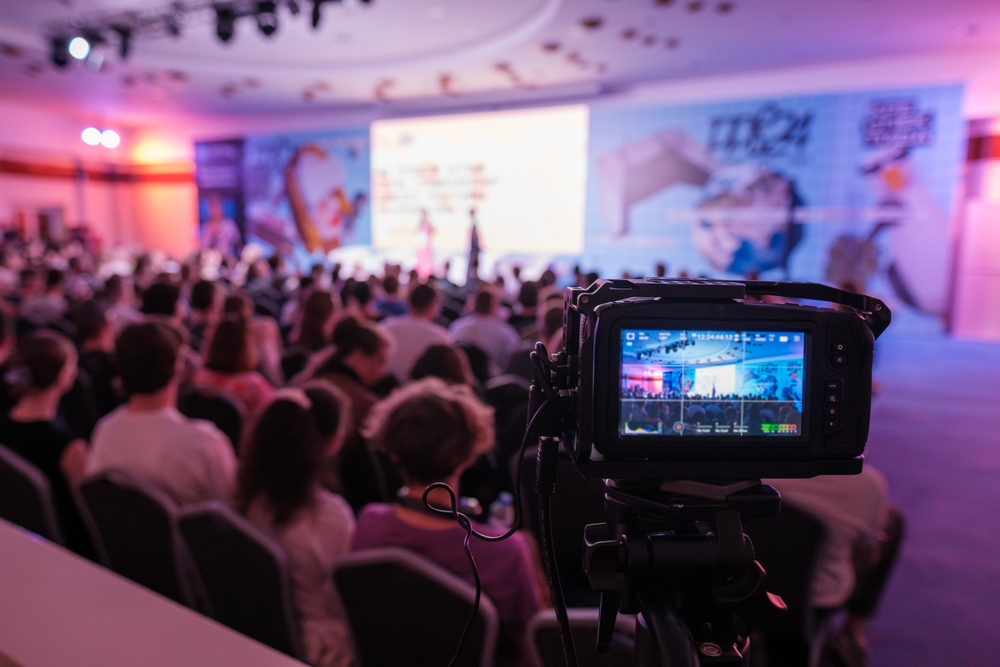

Large conferences in New York succeed when every voice carries, and every screen commands attention. In a city that hosts 65 million visitors annually, planners can elevate attendee experience by treating audiovisual as a strategic pillar.
When you master how to plan AV for large conferences in New York, you create consistent sound, clear visuals, and confident presenters across every room. That preparation keeps schedules tight, supports hybrid audiences, protects brand credibility, and helps you deliver moments at scale.
Discover how to translate your agenda into a practical audiovisual plan that fits New York venues and attendee formats of 500 and more. You will learn how to budget intelligently, plan for backups, prepare for staffing, and use simple post-event metrics to improve results for future conferences. If your program also travels west, our guide to planning AV for large conferences in Salt Lake City walks through the venue, altitude, and timeline factors specific to that market.
Understanding New York Venue Requirements
New York venue requirements directly affect how your AV plan performs and how efficiently your crew can execute large conferences. You can select the right systems with confidence and keep crews productive when you confirm access rules, power, rigging, and network options first. Venue requirements ultimately shape your technical plan and your day-of logistics.
Use Venue Scale to Plan for Power and Rigging Requirements
Venues like the Javits Convention Center can accommodate up to 1500 attendees. You can use this scale as your benchmark for planning power distribution and rigging, as larger rooms leave less margin for error. Confirm where you can hang audio, lighting, and video, then align those points with your stage layout and sightlines.
Electrical capacity should be evaluated against total system load, with cable paths planned to keep walkways clear and crews moving efficiently. Locking these requirements early supports safer installs and unified show cues across the event.
Match Visuals and Audio to Each Room’s Architecture
Daylight-forward venues like The Glasshouse allow you to create a premium look. Brighter displays ensure content remains clear as natural light becomes part of the experience. Expo-style halls like the New York Expo Center offer the scale you need to distribute audio evenly, while protecting sightlines from every seating zone. In large-event audio visual planning, these venue-driven choices keep content consistent and reinforce your brand across stages.
Final venue planning should also account for New York weather transitions between loading zones and event floors. Confirm indoor marshalling, protect cable runs in high-traffic areas, and keep staging simple. These steps ensure plans for New York conferences move smoothly into the build phase with effective coordination.
Timeline for Large Conference AV Planning
Linking each decision to a milestone keeps your communication clear and supports quick approvals. A structured timeline reduces last-minute changes and ensures technical decisions support the overall show flow. Knowing when you should lock venue details, AV equipment, and rehearsals is invaluable. You can build a phase-based checklist and follow a proven structure to plan for large conferences in New York:
- Six months out: Confirm venue drawings, access windows, and room counts.
- Three months out: Lock show format, screen plan, and breakout counts.
- One month out: Finalize content specs, cue lists, and network needs.
- One week out: Publish labor calls, load-in maps, and room checklists.
- On event days: Run rehearsals, line checks, and show calling.
Use conference technology that New York teams trust by keeping updates in one shared system. When everyone references the same schedule and room-by-room plan, you strengthen coordination and keep production tasks moving to focus on essentials.
Essential AV Components for Over 500 Attendees
At a large scale, AV systems must deliver clarity from the front row to the back of the room. Standardizing room setups simplifies operations and keeps presenters confident. Add creative upgrades that amplify key moments once that foundation is in place so you map out how to plan New York AV for large conferences:
- Specify speech-first audio coverage, then add music elements that support branding.
- Choose LED video walls for bright, flexible visuals, or choose projection mapping for scenic storytelling.
- Equip breakout rooms with consistent controls, displays, and confidence monitors for fast transitions.
- Build streaming with wired internet, dedicated encoders, and recording support.
Plan AV equipment for interpretation and accessibility early, especially when tracks run in parallel or speakers join remotely. Confirm who will manage language channels, accessibility requirements, and remote speaker feeds as you evaluate in-house versus professional audiovisual services. These decisions directly shape budget priorities.
Working with Local AV Vendors
A local AV partner turns your plan into smooth execution with trusted crews, established logistics, and deep venue familiarity. Your conferences run with greater efficiency when a professional AV team understands New York labor requirements and union scheduling.
Understanding how local teams approach execution and backup readiness is vital when refining your large conference AV plan. Key questions to ask when evaluating New York processes include how multi-room changeovers are managed, how redundancy is built into audio, video, and network systems, and how coordination happens with venue operations and local labor.
Reviewing real-world brand experience examples helps align creative ambition with a clear technical strategy. This approach creates a unified AV experience and ensures that every session delivers the same polished standard.
Budget Planning and Cost Optimization
A practical AV budget balances attendee experience with disciplined execution. You can protect brand perception while keeping spend aligned with measurable outcomes by investing in elements audiences notice most. Applying your AV plan for large New York conferences effectively includes setting a clear framework to confirm labor and schedule drivers early.
Previous Events Outlook research reported that 85% of event marketers increased their budgets, showing strong momentum toward better tools and more memorable experiences. In large event audio visual planning, prioritizing crystal-clear audio, high-impact screens, and an experienced show-calling team keeps every cue on track.
Make Every Event Land With Merestone
Thoughtful planning turns conference AV from a checklist item into a strategic advantage. You build a show that feels effortless for attendees and speakers when you design venue requirements, timelines, and budgets around the moments that matter most. That is the level of preparation that goes into planning AV for large conferences in New York with confidence.
If you are looking for a plan tailored to your venue, agenda, and audience, contact Merestone for large conference AV support in New York. Schedule a consultation now to start building your next experience.